Podcast:
Abstract:
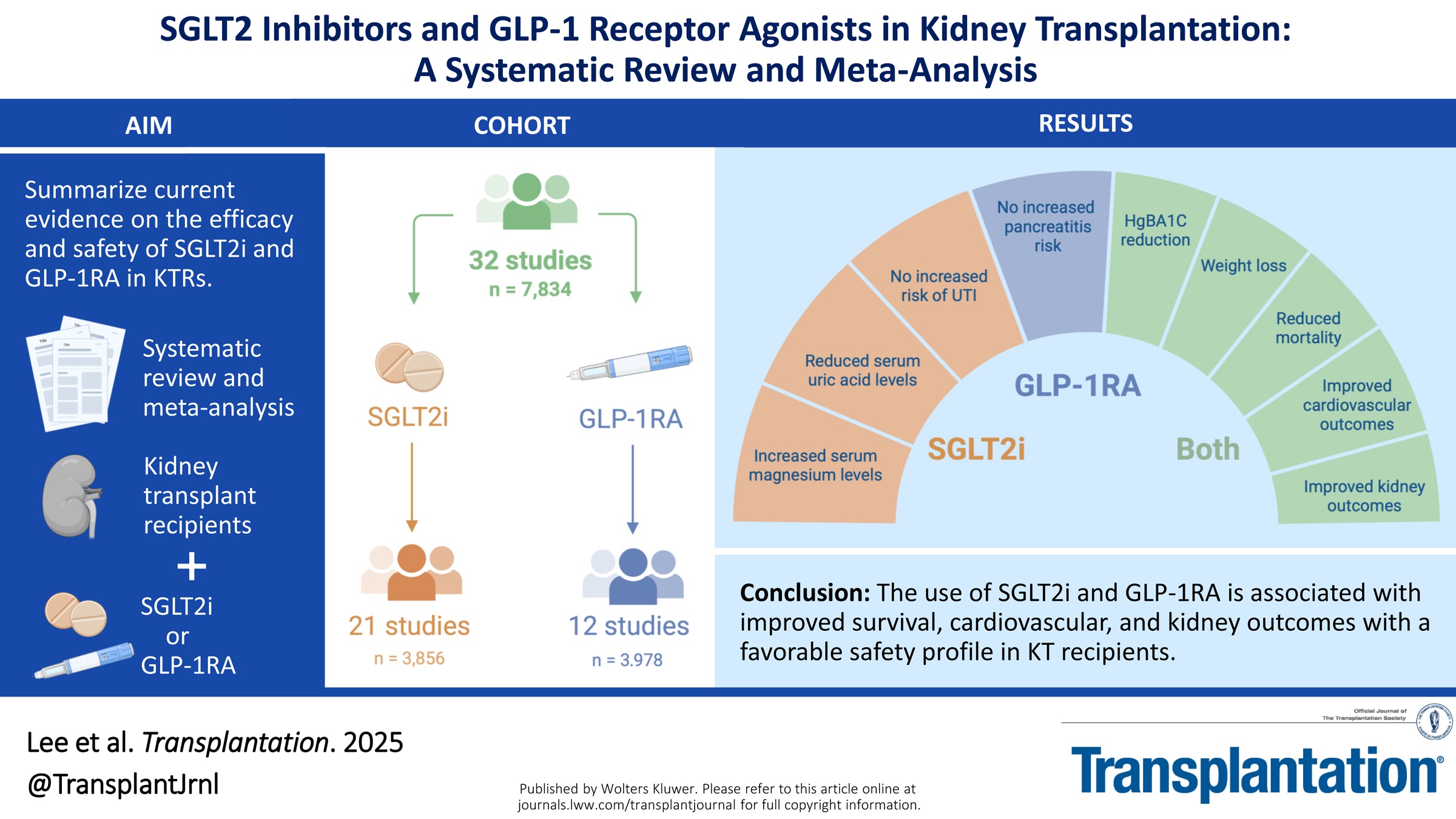
Background: Kidney transplant (KT) recipients experience high rates of cardiovascular disease, allograft dysfunction, and diabetes, negatively impacting long-term outcomes. Sodium-glucose cotransporter 2 inhibitors (SGLT2i) and glucagon-like peptide-1 receptor agonists (GLP-1RAs) provide cardiovascular and kidney benefits in non-KT recipients, but evidence in KT recipients remains limited. This systematic review and meta-analysis provide updated evidence on the efficacy and safety of SGLT2i and GLP-1RAs on KT recipients.
Methods: A comprehensive search of MEDLINE, Embase, and Cochrane databases was conducted through February 27, 2025. Data extraction, risk of bias assessment, and meta-analysis were performed using standardized methods with a random-effects model.
Results: A total of 32 studies, including 7834 KT recipients, were analyzed, comprising 21 studies (3856 patients) on SGLT2i and 12 studies (3978 patients) on GLP-1RAs. Their use was associated with reduced mortality and improved cardiovascular and kidney outcomes in matched control studies. Both agents promoted weight loss (SGLT2i: standardized mean difference -0.59; 95% confidence interval [CI], -1.04 to -0.15; GLP-1RA: standardized mean difference -0.27; 95% CI, -0.44 to -0.10) and hemoglobin A1c reduction (SGLT2i: mean difference, -0.33%; 95% CI, -0.55% to -0.12%; GLP-1RA: mean difference, -0.48%; 95% CI, -0.82% to -0.13%) while maintaining stable kidney function. SGLT2i increased serum magnesium levels and reduced uric acid levels. Safety analysis showed no increased risk of infections (SGLT2i) or pancreatitis (GLP-1RAs).
Conclusions: SGLT2i and GLP-1RA were associated with improved survival, cardiovascular, and kidney outcomes with a favorable safety profile. Future randomized controlled trials are necessary to confirm the efficacy and safety in this high-risk population.