Background: Kidney xenotransplantation offers a promising novel solution to the global organ shortage, although the expected postoperative imaging characteristics remain undefined.
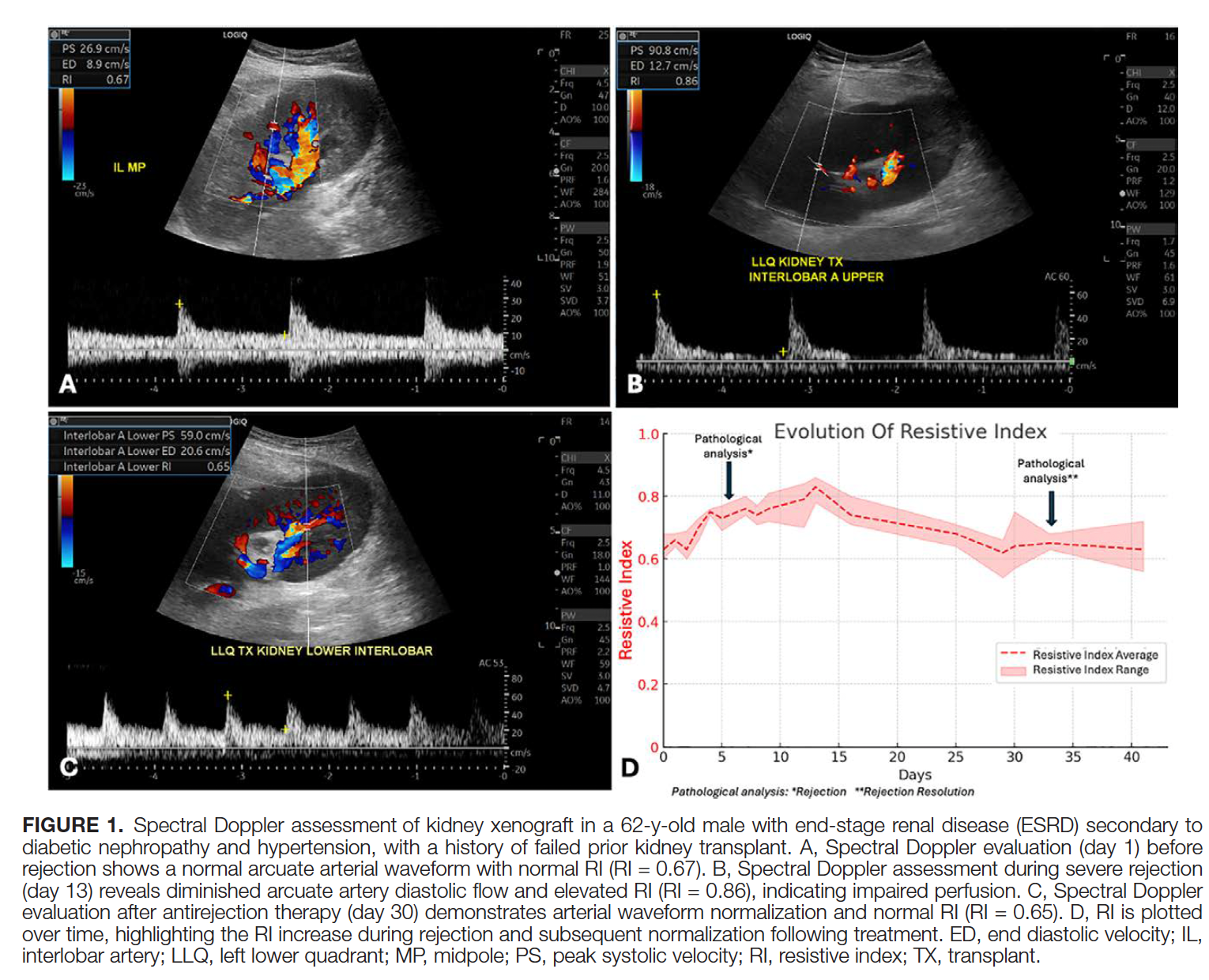
Methods: We report the first application of longitudinal grayscale, color, and spectral Doppler ultrasound in 2 human recipients of genetically engineered porcine kidney xenografts. One recipient additionally underwent serial contrast-enhanced ultrasound to assess parenchymal perfusion. Imaging findings were correlated with serum creatinine trajectories and biopsy-proven rejection.
Results: In both recipients, spectral Doppler abnormalities-including elevation in resistive index-preceded biopsy-confirmed T-cell-mediated rejection. Contrast-enhanced ultrasound in 1 recipient revealed delayed contrast enhancement that paralleled rejection and normalized with treatment. Neither graft demonstrated significant posttransplant growth, with observed changes in graft length remaining within the expected range for Yucatan miniature swine-derived kidneys.
Conclusions: These findings provide the first preliminary ultrasound-based insights into kidney xenograft vascular dynamics and growth patterns, underscoring the potential of ultrasound as an essential tool for noninvasive monitoring of kidney xenotransplants.
PDF full article link